Identify and record
Assess visible invasive growth and the site conditions that shape a practical response.


Surveys, management plans and targeted treatment for riverbanks, water-adjacent land and connected corridors.
Our invasive plant experience began on Sheffield’s rivers in 2012, including practical Japanese knotweed containment and herbicide work. That background continues to inform how we approach riverbanks, water-adjacent land and environmentally sensitive sites.
We consider access, biosecurity, the watercourse and surrounding habitat alongside the invasive plant itself.
Discuss a river site →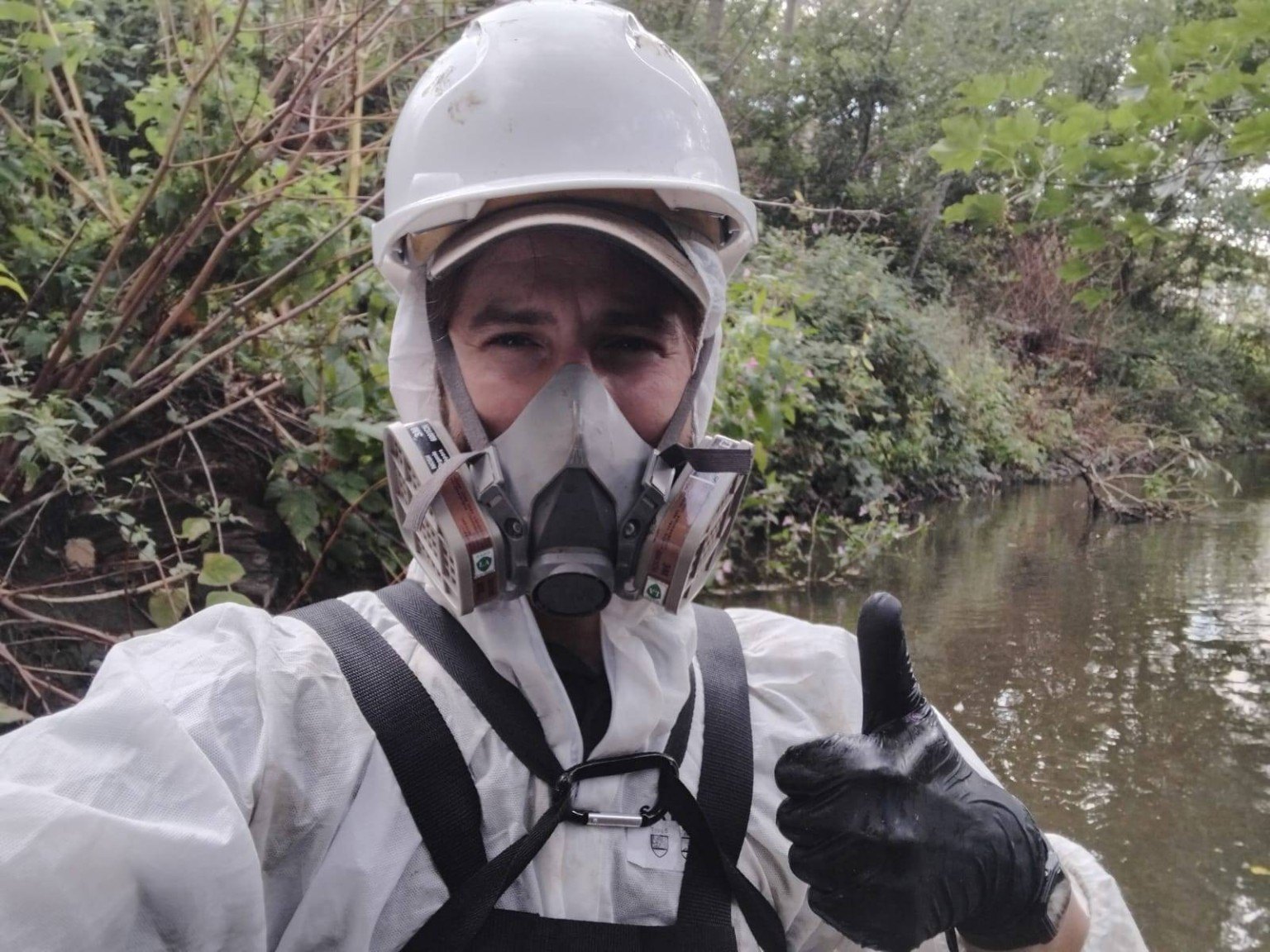
Assess visible invasive growth and the site conditions that shape a practical response.
Set out a proportionate management plan, treatment area, timing and monitoring approach.
Provide targeted herbicide treatment and follow-up visits as agreed for the location.
In England, herbicide use in or near water requires an Environment Agency agreement in advance. We assess that requirement for the proposed work. Read the Environment Agency guidance ↗
Japanese knotweed, giant hogweed and Himalayan balsam can all affect river corridors. A useful response starts with correct identification, the extent of the growth, access, the watercourse and how the land is used.
We discuss the treatment area, timing, biosecurity and follow-up before agreeing a plan. The scope depends on the plant and the site.
Discuss a river site →Share the watercourse location, photographs if available and what the land needs to be used for.